The vulnerability was
A website can work perfectly and still be exposed to a critical vulnerability.Pages load normally,…
Search
A website can work perfectly and still be exposed to a critical vulnerability.Pages load normally,…

There are images we recognise almost immediately, even when we know very little about them. Picasso…

Every few years, a technology emerges that seems destined to take the place of WordPress.First came…
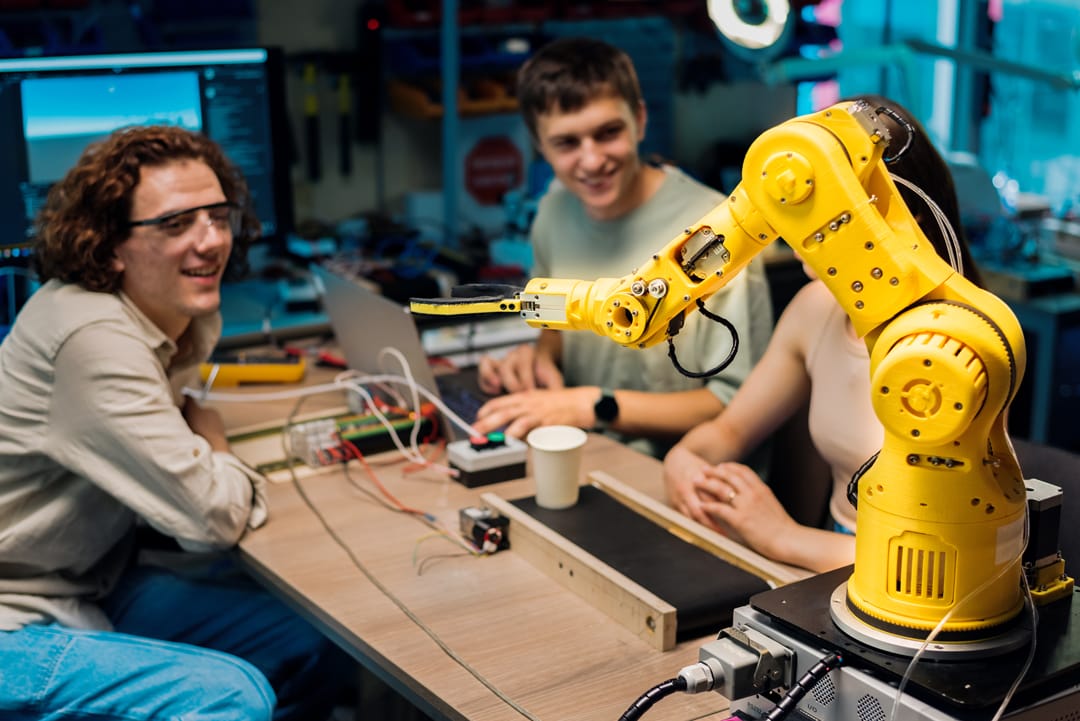
The GPS suggests a route. The analytics system highlights an anomaly. A platform recommends an action. A copilot generates an answer that seems reasonable.
None of this feels strange. On the contrary: it all makes enough sense for us to move forwards.
That ‘enough’ matters.
When an automated recommendation seems plausible, we tend to pay less attention to it. We stop checking it against other sources, looking for a second explanation or asking ourselves what information might be missing. The answer does not need to seem perfect. It only needs to seem good enough.
The problem arises when that trust remains even in the face of signals that should make us doubt: we know of an exception, notice an inconsistency, have context that the system probably does not have or, quite simply, something does not quite add up.
And yet we accept the recommendation.
Why do we trust an automated answer even when we have information that should lead us to question it?
Trusting a tool is not necessarily a problem. In fact, much of the value of automation lies precisely in allowing us to delegate tasks, filter information and make decisions more quickly.
The problem arises when that trust turns into a form of authority.
Automation bias describes our tendency to give excessive weight to recommendations generated by automated systems, even when there are reasons to question them. It does not simply mean that we trust technology. It means that, when there is a discrepancy, we may come to consider the system’s answer more reliable than our own judgement or other available evidence.
Several factors can reinforce that perception. A clean interface. A result expressed to decimal precision. An instant recommendation. A confidence indicator of 94%. A dashboard that presents a conclusion without showing all the uncertainty behind it.
All of this conveys a sense of objectivity.
But perceived objectivity is not the same as correctness.
A system may work with incomplete data, apply a model that does not represent a particular situation well or correctly interpret a pattern that, in that context, is not relevant. The answer may be perfectly calculated and still be the wrong answer.
That is why perhaps one of the most important distinctions in increasingly automated environments is also one of the simplest: an answer can seem objective without necessarily being correct.
Thinking requires effort.
Evaluating a recommendation means reviewing data, comparing alternatives, spotting possible contradictions and taking responsibility for reaching your own conclusion. Contradicting a system, moreover, usually requires a reason: explaining why we believe that answer is not the right one.
Accepting the recommendation is much easier.
When a tool offers us a ready-made answer, it reduces some of that cognitive load. We no longer have to build an option from scratch: we can validate it, modify it slightly or simply move forwards.
That efficiency is precisely one of the reasons we use automated systems. The problem arises when the reduction in effort also changes our relationship with the decision.
The transition can be almost imperceptible: we use a tool to help us think and end up using its answer instead of thinking.
Not necessarily because we blindly trust technology or because we no longer have judgement. Often, it happens for a much simpler reason: accepting a plausible answer is cognitively cheaper than questioning it.
And the faster, more convenient and more convincing the system is, the less likely we may be to stop and check whether we actually agree with it.
The problem does not arise only when we do not know that the system is wrong.
Sometimes something more uncomfortable happens: we see a signal that does not fit and still move forwards.
We have a different intuition. We know of an exception. We know context is missing. We spot an inconsistency in the data or a recommendation that does not quite make sense in that particular situation.
But the automated answer still carries more weight.
Part of that force comes from the authority we attribute to the system. If a recommendation has been generated from thousands of data points, a predictive model or a tool that usually works well, questioning it can feel almost like questioning something more solid than our own judgement.
And that is where an important tension emerges.
Our judgement is often partial, imperfect and difficult to explain. The system’s answer, on the other hand, arrives structured, quantified and presented as a conclusion. Although both can be wrong, one of them seems much more convincing.
That is why, in certain contexts, it is not enough to detect an anomaly. We also need to feel that we have sufficient legitimacy to contradict the system.
That shift is subtle, but significant: the system stops being a tool that informs our decision and begins to become the benchmark against which we must justify any disagreement.
And when that happens, the risk is no longer only that a machine might be wrong.
It is that we stop listening to the signals that were telling us it might be wrong.
It may seem that automation bias is, above all, a problem of unreliable systems. But something paradoxical happens: the better a tool works, the easier it is for us to stop monitoring it.
If a recommendation is correct time and again, we learn to trust it. And that trust makes sense. Reviewing every result would be inefficient and, in many cases, unnecessary.
The problem arises when that trust becomes a habit.
If the system has been right nine times, we are likely to pay less attention to the tenth. Not because we know it will be right again, but because we have stopped expecting it to fail.
This is where an important risk emerges: the more reliable the automation, the fewer opportunities we have to exercise our own judgement. We stop looking for anomalies, questioning plausible results and, little by little, practising our ability to recognise when we are facing an exception.
And exceptions are precisely the cases in which we need judgement most.
The paradox is that better technology does not necessarily eliminate human risk. It can shift it. It is no longer just about misinterpreting information, but about ceasing to look because the system is almost always right.
That is why the challenge is not to distrust machines when they work well. It is to prevent their reliability from making us lose the ability to recognise the moment when they stop doing so.
The answer to automation bias cannot be to go back to manually reviewing everything a machine does.
That would negate much of the value of automating.
Automation works precisely because it allows us to reduce workload, speed up decisions and reserve attention for what truly needs it. The challenge is not to distrust every system, but to learn to distinguish when to trust and when to stop.
Not all decisions require the same level of oversight. Some can be delegated almost entirely. Others need an occasional review. And there are decisions where the cost of getting it wrong is high enough to require human intervention.
The question, therefore, is not to choose between human or machine.
It is to decide what we can delegate, what deserves oversight, which signals should trigger our attention and in which situations an automated recommendation needs to be questioned before becoming action.
That requires more than technological literacy.
The important skill will no longer be simply knowing how to use intelligent systems, but knowing when to trust them, when to ask for more context and when to take responsibility for saying: not this time.
For a long time, we have tried to build systems that help us make better decisions.
More data. Better predictions. More accurate recommendations. Automations capable of reducing errors, saving time and helping us identify patterns that might otherwise go unnoticed.
All of this still has value.
But as these systems improve, another challenge emerges: preventing the help from ultimately replacing our ability to decide.
Automation can offer us information, patterns, probabilities and recommendations. It can reduce uncertainty, bring order to complexity and even detect signals we do not see.
But none of these things removes the need for judgement.
Perhaps, in fact, the opposite is true.
The more capable systems are of telling us what to do, the more important it will be to retain the ability to ask ourselves whether we should do it.
Doubt does not mean systematically distrusting technology. It means keeping open the possibility that there is context the system does not know, an exception the model has not anticipated or a signal worth listening to before moving forwards.
Because the real risk is not that machines make mistakes.
It is that a moment comes when we no longer feel capable of questioning them.
When a machine and your own judgement disagree, what do you need in order to decide which of the two to listen to?
Sources:

Sometimes, the problem does not begin when traffic falls. It begins when there is too much of it.That is what happened when reviewing the data from a client’s…

There comes a point in many organisations when the conversation about marketing moves to another room. It is no longer confined to the communications team, the…
A website can work perfectly and still be exposed to a critical vulnerability.Pages load normally, forms respond, users can access their accounts, and services…

Many organisations have dashboards full of figures on visits, clicks, conversions, time spent or satisfaction. However, having more data does not mean…







Comments