
Why do we remember
There are images we recognise almost immediately, even when we know very little about them. Picasso…
Search

There are images we recognise almost immediately, even when we know very little about them. Picasso…

Every few years, a technology emerges that seems destined to take the place of WordPress.First came…

Sometimes, the problem does not begin when traffic falls. It begins when there is too much of it…
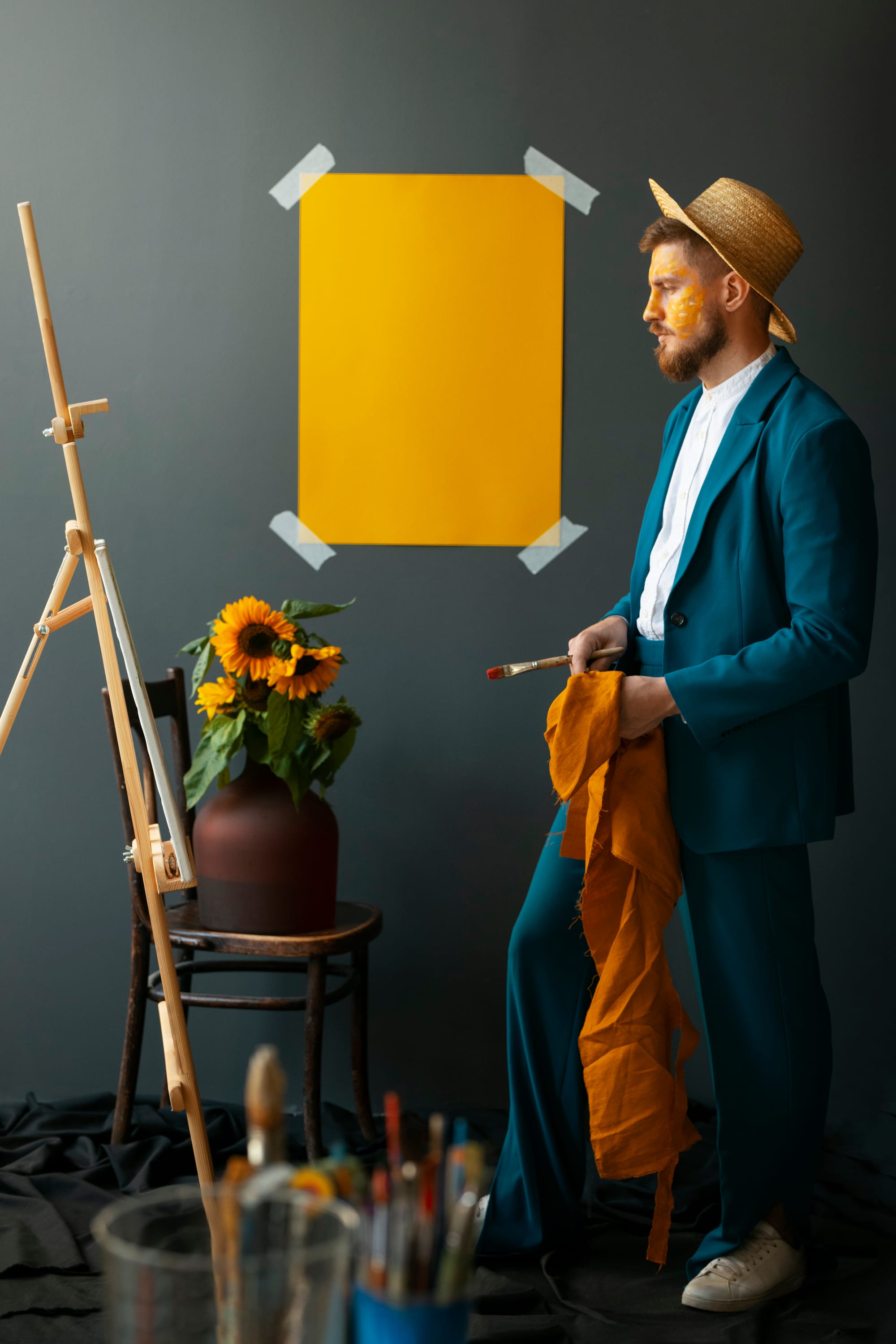
Traditional advertising has largely operated as a discipline of impact: capturing attention, condensing a message and driving action. The TV spot, the radio advert, the display ad, the tagline. A language designed to interrupt and persuade. Yet the way people relate to brands — and what they expect from them — is changing rapidly.
In an ecosystem saturated with stimuli, it is no longer enough to “communicate” a product or list its benefits. Many brands have begun to compete in another territory: the cultural one. They are not simply launching campaigns; they are producing works. Short films, installations, exhibitions, immersive experiences, digital performances or collaborations with artists. Proposals that not only inform or entertain, but bring meaning, build an imaginary world and become organically integrated into people’s conversations.
The shift is profound: the focus moves from pursuing reach and frequency alone to also seeking impact. From a campaign designed to sell “now” to a work intended to last, be reinterpreted and circulate in its own right. When a brand makes that leap, it ceases to be merely an advertiser: it begins to behave like a cultural producer.
In this article, we will look at what this change really involves. You will see how the move from the spot to the work takes place, why some brands come to be “mistaken” for contemporary art, and to what extent this new creativity can be understood as a form of modern patronage. We will close with practical criteria for activating this strategy without falling into performative posturing or empty aesthetics.
The move from the spot to the work almost always begins with a decision about format. The classic advert is built for efficiency: a few seconds, a clear idea, a call to action. It works when the aim is to sell quickly or embed a simple message. But when a brand wants to occupy a cultural — not merely commercial — space, it needs different rhythms, different codes and, above all, different spaces.
That is why we are seeing more and more brands producing branded films (short films, documentary pieces, series), designing temporary exhibitions, putting on artistic pop-ups that resemble small galleries, or creating performances in which the experience happens live (or via streaming) and the audience takes part. Sometimes the product appears; at other times, it is barely suggested. What matters is not the object, but the universe: aesthetics, narrative, values, emotion.
And what does the “art” format offer that an advert cannot? Three very specific things:
Here lies the key difference: it is not about “saying” things better, but about provoking better. It is not about repeating a tagline, but about building an experience that leaves a mark. When a brand understands this, it stops behaving like an advertising broadcaster and starts acting like a creator: someone who produces something the audience not only consumes, but remembers, discusses and, at times, incorporates into their own identity.
There comes a point at which a brand stops “making a campaign with an artistic aesthetic” and begins to create something that could exist in a gallery, at a festival or in a museum. That point is not determined by production values or budget: it is defined by the combination of aesthetics + concept + content curation. When those three elements are properly aligned, the work holds up even if you remove the logo. It still makes sense, invites interpretation and provokes a response. And that is what makes, in the audience’s eyes, branding become confused with contemporary art.
The key is understanding that contemporary art is not merely a beautiful or provocative aesthetic: it is a language. And many brands are beginning to speak that language — sometimes successfully, sometimes clumsily — by applying codes that once lay outside the advertising playbook:
But this is where the real risk emerges: coming across as an imitation. It is relatively easy to copy the surface (restrained typefaces, long takes, silences, “conceptual” artefacts, a serious tone). What is difficult is sustaining a powerful idea beneath it. When a brand adopts the codes of art without a clear intention, the work is perceived as scenery: it “looks profound”, but it is not. And the audience — especially those most culturally connected — spots that quickly.
In other words: the challenge is not to appear contemporary, but to have something to say using the resources of art. Because when there is no concept, aesthetics become a costume. And when the concept is genuine and well curated, the brand does not merely communicate: it signs a work that is understood, discussed and remembered.
When a brand begins to produce works, collaborate with artists or promote cultural experiences, an inevitable question arises: are we looking at a new form of patronage? In a sense, yes. Many brands are acting as funders and, at the same time, as platforms: they provide budget, infrastructure, visibility and access to mass audiences for creators, emerging scenes and communities that would otherwise have less exposure.
This can be valuable. Not only because of the money, but because of what it enables: time to create, professional production, physical spaces, technology, global distribution and even cultural legitimacy. At its best, the brand works as a “producer” in the noblest sense: it makes it possible for something to exist and travel far.
But this same dynamic brings with it a delicate tension: cultural support vs cultural appropriation. The difference lies not in the rhetoric, but in the power relationship and the real distribution of value. Is the brand supporting a scene, or extracting its aesthetics and credibility to sell more? Is it amplifying a community, or using it as decoration? Does the work emerge from an authentic collaboration, or from a brief that reduces culture to an advertising resource?
When the public perceives instrumentalisation, the reaction is usually immediate: rejection, cynicism and accusations of performative posturing. And there is an important nuance here: even with good intentions, a brand can get it wrong if it does not understand the cultural context, respect its codes or if it places its logo above authorship.
If a brand wants to do it well — and make that cultural investment credible — there are four criteria that make the difference:
Ultimately, the question is not whether a brand can be a patron, but how it is one. Because new cultural prestige cannot be bought with production alone: it is earned through respect, reciprocity and a way of collaborating that leaves real value with the people and scenes that make that culture possible.
Turning a brand into a cultural producer is not about “doing something artistic” every now and then. It is about making strategic decisions that sustain a creative idea with continuity, discernment and respect for the cultural context. Otherwise, what remains is make-up: a campaign with filters, plenty of tone and little substance. To avoid this, there are five practical principles that act as a compass.
Before thinking about format, ask a basic question: what is this work for? Not “to generate buzz”, but to activate meaning: do you want to open a specific cultural conversation? Create an imaginary world around a brand value? Give visibility to a community? Try a new language? When the purpose is genuine, the work has direction. When the purpose is “to look modern”, it shows.
Brand art is not an aesthetic costume: it is an extension of its DNA. If the brand cannot explain why that work fits with its history, tone and values, the audience will perceive it as opportunism. Coherence does not mean repeating the same thing, but having a thread: a sensibility, an obsession, a position.
The difference between “content” and “culture” is often content curation. Curating means choosing with discernment: which references, which artists, which codes, which boundaries, what is left out. It is not about publishing a lot, but about building a recognisable universe. A brand that wants to produce culture needs to act like an editor, curator or producer: less volume, more intention.
If everything is settled in the brief, it is not co-creation: it is a commission with an aesthetic. Genuine collaboration means making space: allowing interpretation, accepting nuances, even a degree of discomfort. It also means looking after the process: fair remuneration, credit, clear rights and a relationship that does not treat the creator as a “resource”.
The typical mistake is measuring a cultural work as though it were an advert. Here you need a combined framework: yes, brand metrics (awareness, consideration, search, traffic, lift), but also cultural metrics:
When you measure both dimensions, you avoid two traps: declaring success because of empty likes, or declaring failure because it did not sell within 48 hours.
Ask yourself these questions before producing:
If most answers are “yes”, you are probably looking at brand art. If not, you are looking at a campaign with an artistic veneer. And that is not inherently bad… but it does not fulfil the promise of “from the spot to the work”.
The move from the spot to the work is not a cosmetic change: it is a change in mindset and, above all, in the capabilities within the marketing team. If a brand wants to act as a cultural producer, it needs to incorporate skills that previously lay outside the department: curation (the discernment to select languages, references and collaborations), cultural production (formats closer to audiovisual, experiential or exhibition-based work), partnerships (with artists, studios, institutions, communities and platforms) and a much more nuanced legal approach (copyright, licences, image rights, intellectual property, collaboration contracts).
The way planning is done also changes. Instead of thinking only in terms of campaigns, teams begin to think in terms of projects: works with a journey, a narrative, a life of their own and continuity. Projects that may generate conversation today, but also build brand memory in the medium term.
The final idea is simple, but demanding: the brands that win no longer compete solely for attention. They compete for cultural relevance. To occupy a place in the collective imagination, to contribute something that people want to share, reinterpret and remember. And in that territory, what makes the difference is not shouting louder, but creating better.
Is your brand creating culture… or merely buying attention?
Sources:

We increasingly make decisions with the help of an automatic recommendation.A platform chooses which video we will watch next. An app suggests how to reply to…
Sometimes, the problem does not begin when traffic falls. It begins when there is too much of it.That is what happened when reviewing the data from a client’s…

There comes a point in many organisations when the conversation about marketing moves to another room. It is no longer confined to the communications team, the…
There are images we recognise almost immediately, even when we know very little about them. Picasso’s fragmented figures, Mondrian’s geometric compositions or…








Comments