
Don’t Give AI Ideas
“Don’t give AI ideas” is starting to sound less like a joke when we see agents accessing unexpected…
Search

“Don’t give AI ideas” is starting to sound less like a joke when we see agents accessing unexpected…

For years, much of interaction design has started from a fairly simple premise: the user decides…

Creativity in marketing is entering a decisive phase. For years, it was understood as a deeply human capability, linked to intuition, aesthetic sensitivity, experience and the ability to construct memorable messages. At the same time, the evolution of the digital environment introduced new layers of technical complexity: data analysis, automation, personalisation at scale and, more recently, generative artificial intelligence. Today, however, creativity can no longer be explained from a single perspective.
In this new landscape, creating for a brand means operating in a hybrid territory where art, technology and strategy converge. Artistic sensitivity remains essential for giving ideas meaning, emotion and identity, but it now coexists with tools capable of accelerating processes, expanding expressive possibilities and transforming how content, experiences and narratives are produced. Contemporary creativity is no longer solely inspiration, nor solely technical execution: it is a constant interaction between human vision and technological capability.
This shift affects not only how marketing teams work, but also the role brands play in digital culture. In a context where audiences expect more relevant, dynamic and participatory experiences, creativity becomes a space for collaboration between people and intelligent systems. That is why discussing the future of creativity in marketing no longer means choosing between art or technology, but understanding how both dimensions can be integrated to build brands that are more alive, more distinctive and more connected to their time.
For a long time, creativity in marketing was associated with campaigns built around one big central idea and a series of self-contained pieces. A television advert, a print ad, a radio spot or an outdoor activation could concentrate weeks or even months of creative effort. The aim was to find a strong concept, translate it across several formats and launch it as coherently as possible. In that model, creativity worked in a more linear way: it was conceived, produced and distributed.
Today, however, that approach coexists with a far more complex and changing reality. Brands no longer engage with their audiences solely through finished messages, but through environments of continuous interaction where content evolves, adapts and is amplified in real time. Creativity is no longer limited to designing individual pieces; it must now articulate narrative and visual systems capable of living across multiple channels, formats and contexts of use.
This change has given rise to hybrid creativity, where disciplines that once operated more separately come together. Design no longer works only on the visual, but also on the experience. Narrative is no longer reduced to the slogan or script, but expands through content, communities and interactive journeys. Technology ceases to be an invisible support and becomes an active part of the creative process, whether through automation tools, personalisation, artificial intelligence or immersive environments. And, in addition, public participation introduces a decisive variable: the brand no longer fully controls the meaning of what it communicates, but constructs it in dialogue with its audiences.
In this context, creativity in marketing increasingly resembles the design of a living ecosystem rather than the production of a closed campaign. An ecosystem in which image, story, experience, data and interaction must work in an integrated way to maintain the brand’s relevance. Hybrid creativity does not replace classic advertising creativity, but it does expand it: it requires it to be more flexible, more cross-disciplinary and better prepared for an environment where ideas are not only broadcast, but also experienced, reinterpreted and shared.
For a long time, art and technology have been presented as two almost opposing forces within the creative imagination. On one hand, art has been associated with intuition, sensitivity, expression and the ability to generate meaning. On the other, technology has been linked to efficiency, automation, logic and process optimisation. Yet in contemporary marketing, that division is becoming less and less useful. Today, the most interesting creativity does not come from choosing one dimension over the other, but from exploring how the two can work together.
Technology has extraordinarily expanded the scope of creation. It makes it possible to produce faster, iterate more nimbly, experiment with new visual and sonic languages, adapt messages to different audiences and turn complex ideas into interactive, immersive or personalised experiences. Artificial intelligence tools, generative environments, collaborative design platforms and creative automation systems are changing not only the speed of production, but also the kind of propositions a brand can develop. As a result, marketing now has a far broader expressive capacity than it did only a few years ago.
But this technical expansion alone does not guarantee relevant creativity. It is art, understood as sensitivity, judgement and vision, that allows an idea to have identity, intention and cultural resonance. The artistic dimension helps decide not only what can be done, but what is worth doing, with what tone, depth and meaning. It brings emotion, symbolic interpretation, aesthetic intuition and an understanding of the cultural context. In other words, it turns technical possibility into a proposition with soul.
That is why, in the future of creativity in marketing, the question will not be whether a brand should rely more on art or technology, but how to combine both dimensions without one emptying the other of meaning. When technology is used without creative judgement, the result may be efficient, but also generic, cold or interchangeable. When artistic vision ignores technological possibilities, it risks becoming limited in reach, adaptability or its ability to connect with the current dynamics of the digital environment. The real opportunity emerges when technology multiplies forms of expression and art directs that power towards a recognisable identity and a meaningful experience.
It is at this meeting point that brands can build propositions that are more memorable, more flexible and more connected to their time. This is not about replacing human sensitivity with intelligent systems, nor rejecting innovation in order to preserve a romantic idea of creativity. Rather, it is about recognising that brand creativity will become richer the better it can integrate the power of technology with the expressive depth of art.
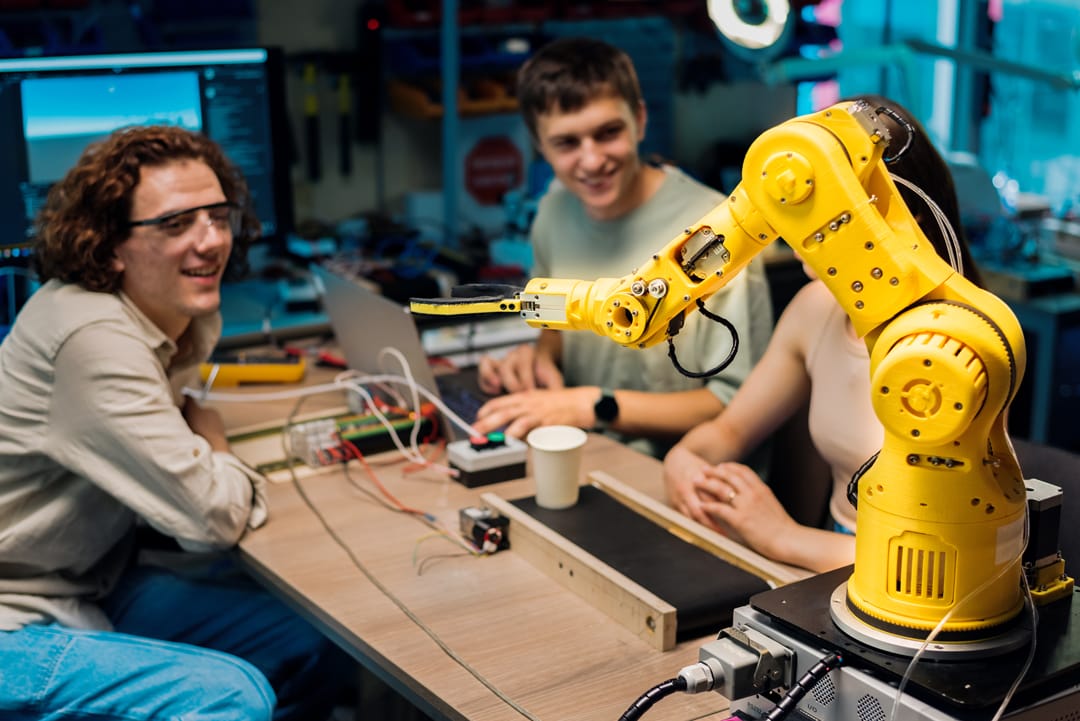
As artificial intelligence and automation tools become more prominent in creative processes, one of the most relevant questions for marketing is no longer whether they will form part of everyday work, but how value will be shared between the human and the technological. Far from suggesting total replacement, the most interesting scenario points towards collaboration, in which each side brings different and complementary capabilities.
Human beings remain irreplaceable in everything related to the deep interpretation of context. A brand does not merely need to produce images, texts, videos or experiences; it needs to understand what they mean, what sensitivity they convey and what impact they may have in a particular cultural environment. This is where intuition, aesthetic judgement, empathy, symbolic interpretation and the ability to identify nuances that cannot always be reduced to data come into play. Human creativity is not only about generating ideas, but about recognising which ones have value, which connect with a particular cultural moment and which truly respond to the brand’s identity.
It is also humans who bring strategic vision. Tools can help produce variations, accelerate processes or broaden the available options, but they do not decide for themselves what story a brand should tell, what position it wants to occupy in its sector or what kind of relationship it aspires to build with its audience. That direction requires judgement, intention and a broad understanding of the business, the social context and the brand’s world. Without this perspective, creative output may become abundant, but also directionless.
Technology, for its part, brings a capacity for execution and exploration that completely transforms the creative framework. It makes it possible to work at unprecedented speed, generate multiple versions of the same idea, test different approaches in a short time and adapt content to highly diverse contexts, segments and platforms. This capacity for exploration broadens the field of possibilities and enables creativity that is more dynamic, more experimental and more connected to the demands of today’s digital environment.
In addition, machines provide scalability. In an ecosystem where brands need to create constantly for multiple channels, audiences and formats, technology makes it possible to sustain production without relying exclusively on slow, manual processes. Added to this is personalisation, one of the great keys to contemporary marketing. Thanks to data and intelligent systems, messages, experiences and journeys can be tailored with much greater precision, making creativity not only more appealing, but also more relevant to each user.
Alongside all this, technology opens up new forms of production that would have seemed unthinkable or inaccessible only a few years ago. From generative images and videos to creative assistants, conversational systems and interactive experiences, today’s tools do not merely accelerate work: they introduce new languages and new ways of imagining what a brand can create. In this sense, technology acts not only as operational support, but also as a catalyst for new expressive possibilities.
That is why the future of brand creativity will not depend on deciding who creates better, the person or the machine, but on understanding how the two intelligences can be combined. Human value will remain in vision, meaning and the ability to connect with cultural complexity. Technological value will lie in speed, breadth, adaptability and the opening up of new creative paths. When both dimensions work in an integrated way, the brand not only produces more, but can create better, with greater intention and a stronger capacity to connect.
The introduction of intelligent systems into creative processes is not only transforming content production, but also the way brands build their cultural identity. Until recently, brand culture was developed primarily through human decisions: tone, aesthetics, narrative, values, campaigns, collaborations and experiences designed under a relatively defined creative direction. Today, however, ideas, images, sounds and narrative pieces can also emerge from generative environments in which artificial intelligence participates actively. This requires a rethink of how a brand’s identity is defined, protected and projected.
In this new landscape, brand culture can become more dynamic, more adaptable and more open to experimentation. Collaboration with artificial intelligence makes it possible to explore multiple visual, narrative or sonic paths in less time, test different languages and develop expressive universes on a scale that was once difficult to sustain. For brands, this opens up the possibility of building more living identities, capable of evolving quickly and engaging with highly diverse audiences, platforms and cultural contexts.
However, this very capacity for expansion presents a decisive challenge: maintaining coherence. The more tools intervene in creative production, the greater the risk that identity becomes fragmented or diluted into a collection of technically effective pieces that are culturally disconnected from one another. Brand culture is not sustained solely by the quantity of content generated, but by the existence of a recognisable vision, a consistent sensitivity and a distinctive way of interpreting the world. In an environment co-created with AI, that coherence will depend more than ever on the human judgement guiding the process.
The way we understand authorship within branding will also change. Many brands will begin to work within frameworks where creation is neither entirely manual nor entirely automated, but shared. The initial idea may come from a person and be developed with the help of generative systems; a sonic identity may be defined by people and expanded through intelligent tools; a visual campaign may combine art direction, data, automation and AI-produced variations. In this context, brand culture will increasingly be the result of a composite intelligence, where human vision determines meaning and technology expands its capacity for execution and exploration.
This change may also make brands more participatory and conversational. If AI makes it possible to adapt experiences, generate creative responses in real time or construct more personalised journeys, brand identity will no longer be perceived merely as a fixed broadcast, but experienced as something more relational and evolving. Brand culture will no longer be expressed only in what the company publishes, but also in how it interacts, responds, adapts and maintains its personality at every touchpoint.
That is why, in the near future, building a strong brand culture will not only involve having a good visual guide or a well-defined tone, but knowing how to direct creative ecosystems shared by people and intelligent systems. The difference will not lie in whether or not AI is used, but in the ability to use it without losing depth, identity or cultural meaning. The most relevant brands will not necessarily be those that produce the most, but those that ensure this technological co-creation strengthens a distinctive voice and an authentic cultural presence.
Although the integration of new technologies is extraordinarily expanding marketing’s creative possibilities, it also introduces risks that deserve careful consideration. Not everything that can be produced faster, in greater volume or with more automation automatically translates into better creativity. Indeed, one of the great challenges of the future will be to prevent an abundance of resources from impoverishing brand identity rather than strengthening it.
One of the most obvious risks is homogenisation. As more teams use the same platforms, the same generative models and similar visual references, a recognisable but repetitive aesthetic begins to emerge. Many pieces may appear striking at first glance and yet prove interchangeable. When this happens, the brand loses its singularity and risks diluting its personality into a visual or narrative language that no longer truly belongs to it. Technology can accelerate creation, certainly, but it can also push towards overly predictable formulas if there is no clear creative direction.
Added to this problem is an increasingly common confusion between efficiency and creativity. Being able to generate more versions, more copy, more images or more campaigns in less time does not necessarily mean building more valuable propositions. Efficiency solves processes; creativity, by contrast, needs intention, judgement and meaning. A brand may produce a huge volume of content and still say nothing relevant, evoke no emotion and leave no mark. When the logic of speed prevails without strategic reflection behind it, creativity risks becoming a production line that is visually sound but culturally empty.
Another significant risk is excessive dependence on tools. When teams delegate too much to automated systems, they may begin to weaken capabilities that remain essential: thinking deeply, making complex aesthetic decisions, detecting cultural nuances, taking creative risks or defending a vision of their own. If everything is resolved through automated suggestions, optimised templates or statistically effective results, the brand may end up operating within increasingly narrow boundaries. And in that process, it loses precisely what made it different: its voice, its judgement and its capacity to interpret the world through its own sensitivity.
There is also a danger that creativity becomes excessively reactive. Today’s tools make it possible to respond quickly to trends, emerging formats or stimuli from the digital environment, but this agility can become a trap if the brand lives in a state of permanent adaptation to the immediate without building a recognisable long-term direction. Being present in every conversation is not the same as having a strong cultural identity. In some cases, the obsession with constant adaptation can erode coherence and make the brand appear opportunistic, scattered or superficial.
That is why the real challenge of the creative future will not only be learning to use new technologies, but developing the maturity required not to subordinate all creativity to them. Tools can multiply possibilities, but they do not replace human judgement. Without judgement, automation produces noise. Without vision, efficiency produces emptiness. And without a clear sensitivity, a brand may end up generating a great deal of content but very little culture. In an increasingly automated environment, precisely for that reason, the value of human creative judgement will be even more decisive.
If the future of creativity in marketing will be shaped by the convergence of art, technology and artificial intelligence, then preparing teams cannot be limited to adopting new tools. The real change does not only consist of learning to use generative platforms, automation systems or analytics environments, but of redesigning the way teams think, collaborate and make creative decisions. The advantage will not lie in having access to technology, but in knowing how to integrate it thoughtfully within a strong brand vision.
One of the first steps will be to develop hybrid profiles. This does not mean everyone must master everything, but it does mean marketing professionals will need to move more comfortably between disciplines that were previously more separate. The creativity of the future will require an understanding not only of how to tell a story or design an experience, but also of how those decisions interact with data, platforms, automation and the possibilities of artificial intelligence. The best-prepared teams will be those able to combine narrative sensitivity, technological understanding and strategic orientation.
It will also be essential to break down internal silos and strengthen collaboration between strategy, design and technology. For a long time, these areas have operated in parallel in many organisations, when in reality the new creative environment requires much closer integration. Brand building can no longer be conceived solely from the creative department or resolved only through the technical layer. For an idea to have impact, identity and adaptability, it needs to emerge from shared conversations between those who understand the business, those who construct visual and narrative language, and those who make technological execution possible.
Alongside this, teams will need to develop creative judgement in addition to technical mastery. Knowing how to use a tool is important, but not enough. What will be decisive is learning to assess what is produced, distinguish what is interesting from what is merely correct, recognise what fits the brand identity and detect when a proposal brings genuine cultural value. In a context where generating options will become ever easier, judgement will be more valuable than mere production capacity. Brands will need not only people capable of creating more, but professionals capable of making better decisions.
Another key aspect will be encouraging experimentation with purpose. The introduction of new technologies invites teams to test, iterate and explore unprecedented possibilities, and this attitude will be positive as long as it does not become a succession of directionless trials. Experimenting should not mean adopting every novelty on impulse or out of fear of being left behind, but exploring with a clear intention: to learn, find new forms of expression, improve experiences or discover creative territories that are coherent with the brand. The most valuable innovation will not be the most eye-catching, but the one aligned with a recognisable strategy and identity.
Finally, it will be essential to build processes in which artificial intelligence supports, but does not replace, vision. This means clearly defining at which stages of the work it can add most value, how results are validated, who makes the final decisions and which criteria must be preserved to avoid diluting the brand’s personality. AI can accelerate tasks, open up paths and broaden creative exploration, but it needs to be framed within a process where human direction continues to set the meaning, intention and coherence. Otherwise, the risk is not only losing control, but also losing depth.
Preparing teams for this new stage ultimately requires more than technical updating. It requires a working culture capable of combining imagination, judgement, collaboration and openness to change. Much of brands’ creative future will be determined by this balance between human talent and technological capability. The organisations with the most tools will not necessarily win, but rather those whose teams know how to turn this fusion into a more intelligent, more sensitive and more strategic way of creating.
The future of creativity in marketing will not be defined by the victory of art over technology, nor by the predominance of automation over human intuition. Rather, it will be defined by the ability to integrate both worlds in a coherent, strategic and culturally meaningful way. In this new stage, creating will no longer involve only imagining big ideas, nor only mastering advanced tools, but building a fertile dialogue between sensitivity, judgement, data, experimentation and technical capability.
The most relevant brands will not necessarily be those that produce the most content, nor those that are first to adopt every new platform or intelligent system. They will be those that know how to use technology without diluting their identity, that harness speed and scalability without giving up creative depth, and that maintain a distinctive voice within an increasingly automated ecosystem. In an environment where generating becomes easier, the true differentiator will remain having something valuable to say and a recognisable way of expressing it.
That is why the future of creativity in marketing will be profoundly collaborative. Not only because people and machines will work ever more closely together, but because brands will need to unite disciplines, sensitivities and capabilities that once operated separately. Strategy, design, technology and culture will need to be understood as parts of the same creative process. And within this convergence, human imagination will remain essential in giving meaning, direction and authenticity to everything technology makes possible.
Ultimately, the great challenge will not be choosing between art or innovation, emotion or efficiency, intuition or artificial intelligence. The real challenge will be learning to combine them without losing what makes a brand truly memorable: its ability to connect with people through an identity that is distinctive, alive and culturally relevant.
Is your brand ready to create in an environment where human imagination and artificial intelligence no longer compete, but collaborate?
Sources:
For years, much of interaction design has started from a fairly simple premise: the user decides and the system responds.We click, choose an option, confirm an…

There comes a point in many organisations when the conversation about marketing moves to another room. It is no longer confined to the communications team, the…

We increasingly make decisions with the help of an automatic recommendation.A platform chooses which video we will watch next. An app suggests how to reply to…

In Dante’s Peak, the volcano begins to speak long before it erupts.Small earthquakes. Changes in the water. Dead animals. Affected vegetation. Temperature…






Comments